Table Of Content

Mercury's charm was carried by his ability to not take himself too seriously. Freddie Mercury helped make Queen one of the biggest ever rock bands, and he is regarded as one of the greatest singers in the history of rock music. Queen recorded over fifteen studio albums and were constantly travelling the globe - they toured Japan six times alone - producing more radio-friendly pop music as they evolved, and becoming one of the most popular and enduring bands of the 20th century.
Billy Idol Releases 40th Anniversary Edition Of ‘Rebel Yell’
Freddie Mercury's stage presence is renowned all over the world, yet less is known of his life backstage. We round up a gallery of candid off-guard moments and insider stories of Freddie Mercury as he travelled - and partied - across the world on the road with Queen. The entertainer wore an array of designs throughout his career, but they all boasted a plunging scoop neckline that bared his chest. As we reach the 30th anniversary of his passing, these Freddie Mercury pictures help outline the contours of his life — one cut far too short.
Chart performance
It wasn’t uncommon to see Mercury with heavy eyeliner and lipstick, and the mid-70s where when the androgynous experimentation really started to take effect. The band was introduced to the world with long shoulder length locks with bangs, leather jackets, the super colorful flower patterned clothing that was oh so popular in the 1970s, and bell bottoms and platform shoes (also very popular in the 70s). Queen would go on to release their sophomore effort, Queen II, that same year, keeping much of the style from their debut. Queen’s early roots can be traced all the way back to the late 60s and early 70s in West London when they were originally known as Humpy Bong. The choice to wear a wig gave the visual performance a whimsical and dramatic quality that went nicely with the song’s quirky and entertaining nature.
The Truth About Freddie Mercury's Mustache
“It’s not a concert you are seeing, it’s a fashion show,” said Mercury of his work with Queen. And if 1977 was the beginning of Mercury officially solidifying himself as a fashion icon, then 1978 and 1979 would be the years where things really began to fall into place. In the midst of Queen’s ‘78 release Jazz and their ‘79 live album Live Killers, the promotional tours for those two records would bring forth many statement pieces from Mercury. In addition to being an incredible artist himself, Mercury was known for making androgynous style popular in the 1970s and 80s, breaking just about every U.K. Fashion rule possible at that time, which in turn has left its own lastiing impact over the decades. Here’s a look at how Queen ruled the world in music, and how Freddie Mercury's fashion evolved over the years.
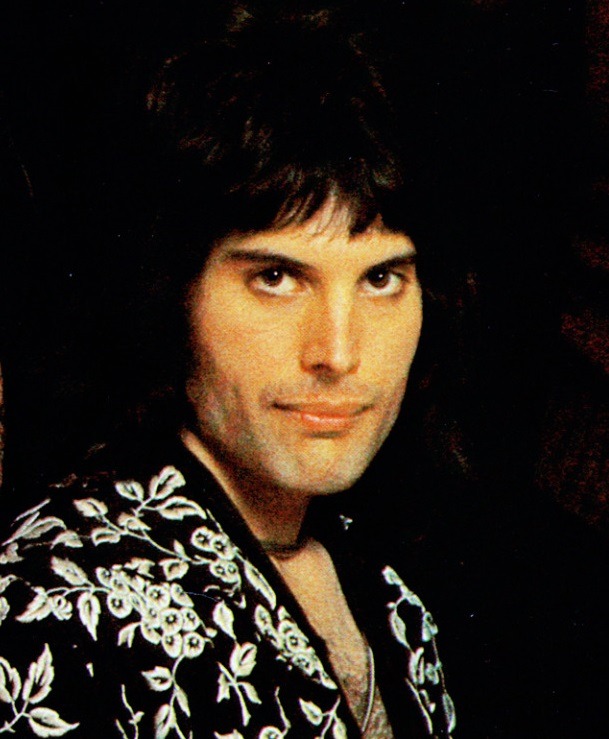
Do u think that Freddie looks better with long hair or do you Freddie looked better with short hair

An artist who explored all forms of creativity, Freddie Mercury expressed himself as much through his fashion as he did his songs, as these pictures reveal. Gradually work the sides up, keeping an eye on the shape, but also the balance of each side. Using the corner of the clipper, work it along your lip line, but make sure to go easy, as you don't want to take too much out. While everything else about the event was grand, from an outfit perspective, Queen kept it simple literally wearing pants and shirts (with Mercury rocking a white tank tucked into fitted blue jeans). It’s quite ironic that their memorable outfits are their most simple due to the significance of the event, and it being their last major performance together before Mercury’s passing. In addition to “the stache,” Mercury’s style would continue to evolve in the early 1980s, along with Brian, Roger, and John.
"If people were to stop buying our records I'd have to become a pole dancer and strip to the music that we wrote," he once said. Whether he was mocking the audience or mocking himself, Mercury managed to instill humor and timeless sex-appeal in almost every public appearance. Brightening up the stage in 1986, the music legend sported a vibrant yellow buckled jacket and white jumpsuit. Each time the book seemed to be close to completion, more 3-D photos were found in forgotten hiding places, prompting further memories and filling in the gaps in the narrative. The images come from Brian May's private collection of photos he took while travelling with the band and form part of a book, the first published with an intimate view from the inside by a founder band member. The photos show Freddie Mercury, Roger Taylor and John Deacon relaxing off-stage and includes a photo of Mercury with his long-time love, Mary Austin.
Freddie Mercury: In his Own Words - Radio X
Freddie Mercury: In his Own Words.
Posted: Tue, 05 Sep 2023 07:00:00 GMT [source]
Feast your eyes on the unforgettable style moments ahead, alongside a sneak peek of Malek in costume designer Julian Day's rendition of his most iconic outfits. Freddie Mercury was undoubtedly one of the biggest fashion icons of all time. It's hard to imagine Freddie Mercury as anything other than the frontman of Queen. And yet, he worked at an airport, sold secondhand clothing, and studied graphic design long before he met his future bandmates.
Along with Brian May (on guitar and vocals), Roger Taylor (on drums and vocals) and John Deacon (on bass guitar), the British group wrote some of the greatest hits in pop music history, performing sold-out gigs around the world. Freddie Mercury, lead singer of rock band Queen, would have turned 75 on September 5 if he hadn't died in 1991 of AIDS-related complications. In his final years, Mercury channeled his instincts for the outlandish into daring musical innovation, including his extraordinary duet with opera legend Montserrat Caballé. When he worked with the Spanish singer, Mercury dressed in a stylish tuxedo, with a black bow tie.
Early life
He effortlessly carried off various hairstyles throughout his career, leaving his fans enamored regardless of whether he sported long or short hair, with or without a mustache. Each style captured a unique essence of his persona, ensuring that his iconic status endures through the ages. Freddie Mercury’s hairstyle in the 1980s was nothing short of epic, marking a dramatic departure from his previous shaggy, shoulder-length hair.
The song itself was notable for being the first Queen piece to feature a synthesizer, but it was the video that generated the real buzz. The charisma and power in his performance style has over the years led to many artists quoting him as one of their biggest inspirations today. Following the enormous conjecture in the press over the last two weeks, I wish to confirm that I have been tested HIV positive and have AIDS. I felt it correct to keep this information private to date to protect the privacy of those around me. However, the time has come now for my friends and fans around the world to know the truth and I hope that everyone will join with me, my doctors and all those worldwide in the fight against this terrible disease.
But there was a fine line of separation between his public persona and his private life, which Mercury defended to his last moments. He may have learned a lesson or two in terms of androgyny from his contemporary, David Bowie, but Mercury didn't in the least come across as reserved or remote in the way that some perceived Bowie's act. Instead, Mercury loved to take both gender roles to grotesque extremes, all carried by his powerful and unparalleled vocals. With its four-octave range, it didn't even fade in the presence of Spanish soprano Montserrat Caballé during their duet, "Barcelona."
The version of the song in the video includes an extra short section after the second chorus not released in any audio format to date. Freddie Mercury, born Farrokh Bulsara in Zanzibar in 1946, was a British singer, songwriter, and musician. He rose to fame as the lead vocalist and pianist of the band Queen, captivating audiences worldwide with his powerful voice and captivating performances. Throughout his career, Mercury’s hair became an integral part of his signature look, contributing to his enigmatic and charismatic stage presence. For short, what made Freddie Mercury’s long hair truly unique was the combination of length, volume, natural waves, jet black color, center parting, and feathered layers. Each of these elements played a role in enhancing his stage presence and adding to his charismatic image.
Freddie Mercury chose not to shave his facial hair, particularly his mustache, as it became an integral part of his image. In the realm of rock music, there are few individuals who have left an indelible mark on the world like Freddie Mercury. So, we will embark on a journey to explore the allure and significance of Freddie Mercury’s long hair.


No comments:
Post a Comment